
If you're starting to worry about Mum or Dad
These are the first things that matter
- Write down what you notice, with the date. Specific notes help the GP, social workers and any benefit claim.
- Talk with Mum or Dad, not about them. Lead with concern rather than criticism, listen, and offer to help rather than take over.
- Speak to their GP. The surgery can't share information without your parent's consent, so ask them to agree to it. The GP can still listen to your concerns.
- Ask the council for a care needs assessment. Anyone can ask, whatever your parent's savings. You have a right to a carer's assessment of your own, too.
- Check what they can claim. Attendance Allowance ignores income and savings, and is often missed. A free calculator, such as Turn2us, shows what else applies.
- Set up Lasting Power of Attorney while they can. It can only be made while your parent has mental capacity. Most families need both types.
Then, as things change, there's more to work through
Health and the NHS
- Get the most from GP appointments
- Know their rights when they leave hospital
- Ask about NHS Continuing Healthcare
- Get a memory clinic referral if memory is a worry
Social care
- Request a care needs assessment
- Understand the council's financial assessment
- Agree a care and support plan
- Consider Direct Payments
- Challenge decisions you disagree with
Money and benefits
- Claim Carer's Allowance or Carer's Credit
- Claim Attendance Allowance or PIP
- Check for Pension Credit
- Ask about council tax reductions
- Apply for a grant for home adaptations
Legal matters
- Set up both Lasting Powers of Attorney
- Make sure their will is up to date
- Protect them from scams and financial abuse
Care and daily life
- Compare home care, day centres and respite
- Look at sheltered and extra care housing
- Choose and pay for a care home
- Manage medication safely
- Reduce the risk of falls
- Help them eat, drink and stay connected
You and the family
- Share the caring with brothers and sisters
- Set boundaries you can keep
- Use your rights at work
- Look after your own health
Planning ahead
- Talk about their wishes for future care
- Consider an Advance Decision
- Understand DNACPR decisions
- Find out about hospice and palliative care
Caring rarely goes in a straight line. The book takes you through each part as you come to it.
What the book covers
Most books on caring are American, full of systems that don't exist here. This one explains how things actually work in the UK: the NHS, council social care, benefits, Lasting Power of Attorney and care homes, from the first signs that Mum or Dad needs help to planning ahead.
Written in plain English for the whole of the UK, it takes you through each part step by step. Health and social care work differently in Scotland, Wales and Northern Ireland, and the book flags where.
Written for the UK in 2026, for people who are tired and stressed: jargon is explained, and the key points are summed up chapter by chapter.
- 218 pages
- 12 chapters
- 4 templates for keeping records
With a directory of helplines and organisations for all four nations of the UK.
It answers the questions that matter
- How do I get a GP to take my concerns seriously?
- What does a care needs assessment involve?
- Could Mum or Dad get Attendance Allowance?
- Why does Lasting Power of Attorney need sorting out now?
- How do we share the caring with brothers and sisters?
- How is a care home paid for, and does the house have to be sold?
- What help is there for me as a carer?
And it doesn't stop at the systems: it helps you look after yourself as well as your parents.
A look inside
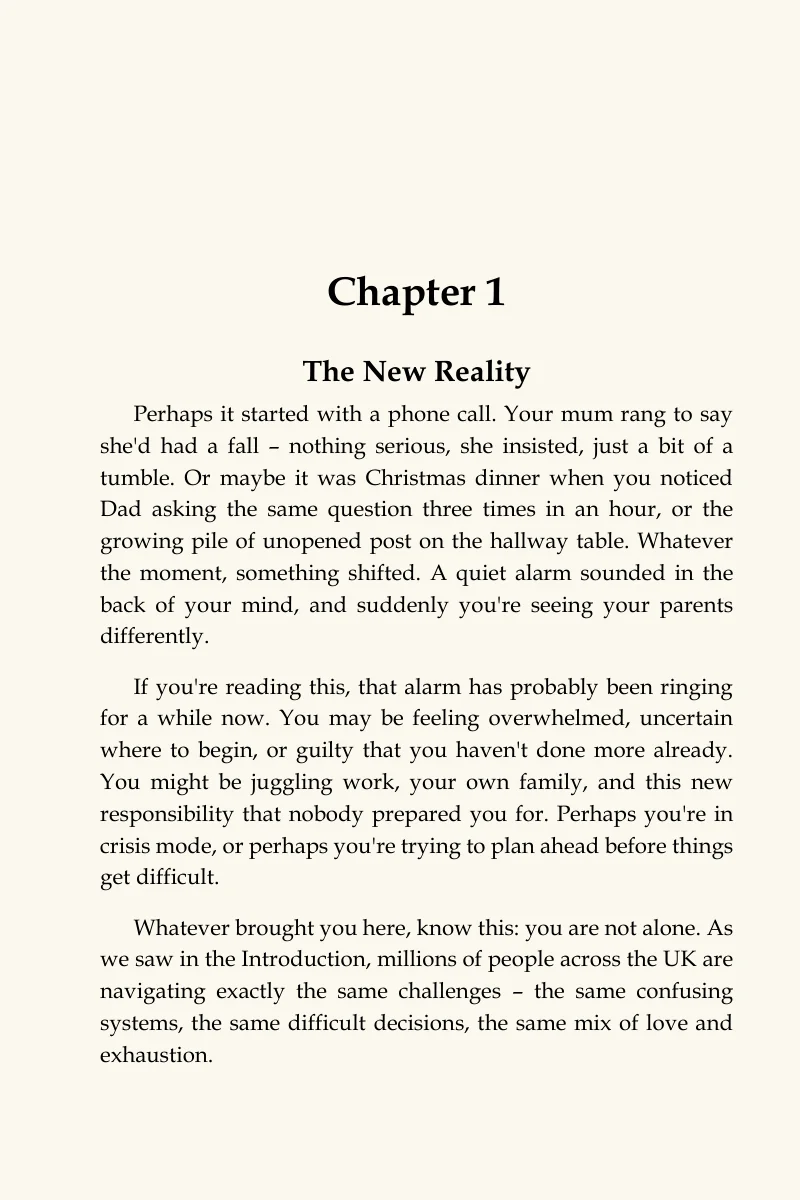
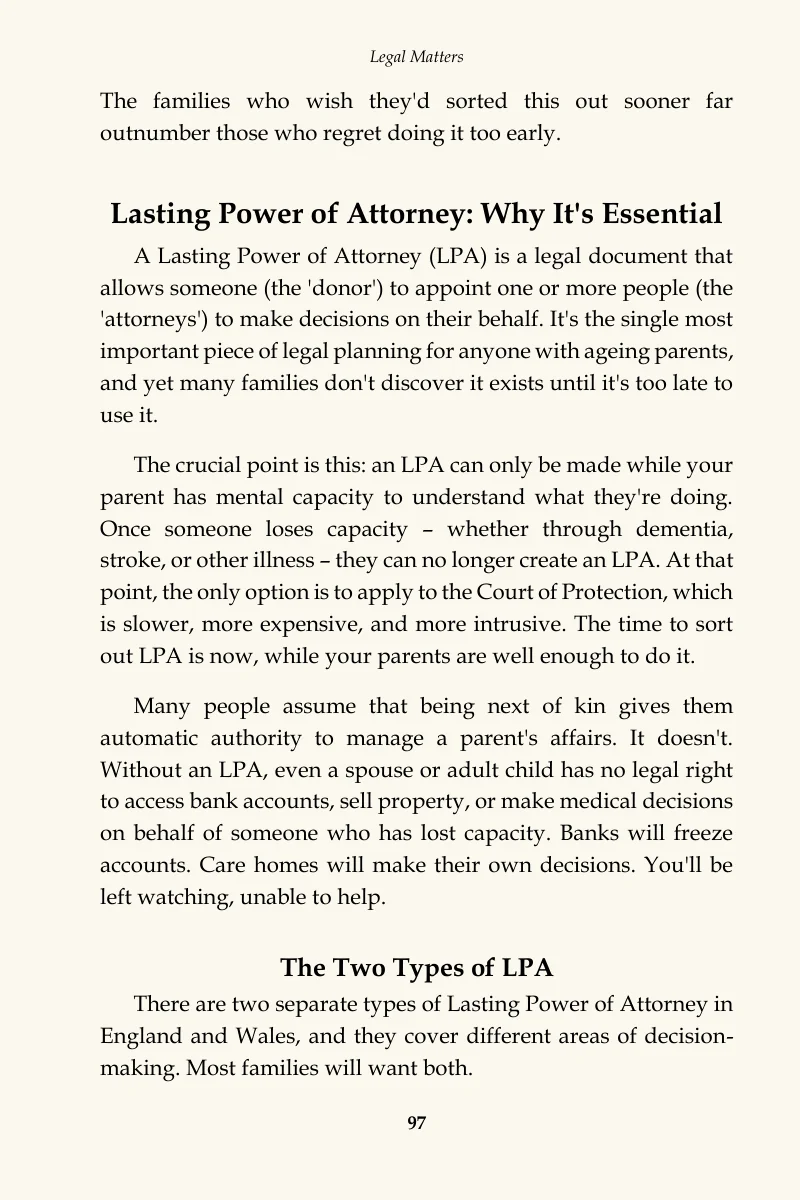
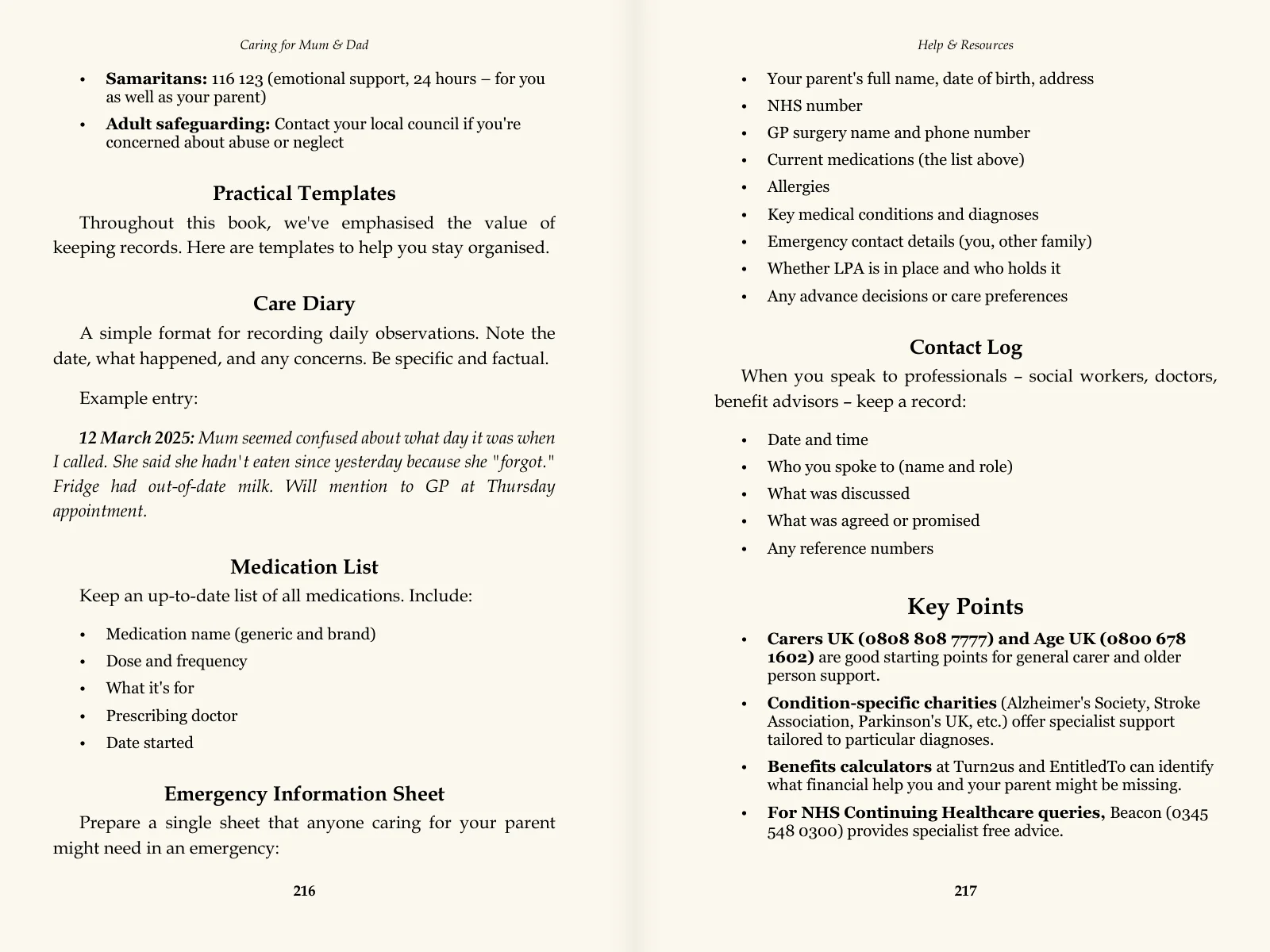
See all 12 chapters
Introduction
Getting started
- The New Reality
- Assessing What's Needed
The NHS and social care
- Navigating the NHS
- Social Care & Local Authority Support
Money and the law
- Benefits & Financial Support
- Legal Matters
Care and daily life
- Care Options
- Practical Daily Care
Family, and you
- Managing Family Dynamics
- Looking After Yourself
The road ahead
- Planning Ahead
- What Remains
Appendix: Help & Resources, with four templates for keeping records
For GP practices, carers centres and care providers
A free "first steps" information sheet to print, one side of A4, in two versions:
For GP practices and carers centresPDF, A4 For care homes and home carePDF, A4
For a version with your organisation's name on it, or bulk copies of the book at a trade price, email [email protected].
Also by Sarah Hartley
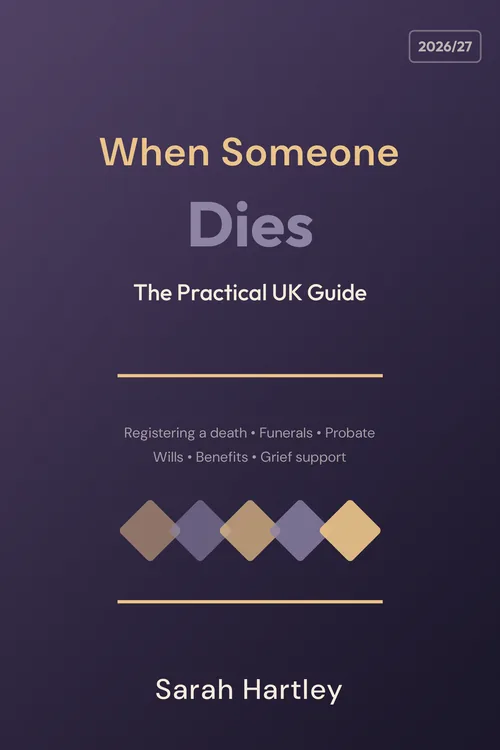 When Someone Dies
The practical UK guide for the days, weeks and months after a death: registering a death, funerals, probate, wills, benefits and grief support.
Visit whensomeonedies.uk
More help
- Carers UK helpline: 0808 808 7777, carersuk.org
- Age UK advice line: 0800 678 1602, ageuk.org.uk
- Samaritans (24 hours a day): 116 123, samaritans.org
- Official guidance: NHS: Social care and support guide